

Roger Raveel
The painter of the ordinary
Raveel makes us look again at what has always been before our eyes. He is not a painter of grand gestures, but of small truths. His work remains relevant because it does not shout, but listens to the light, to people, to life itself.
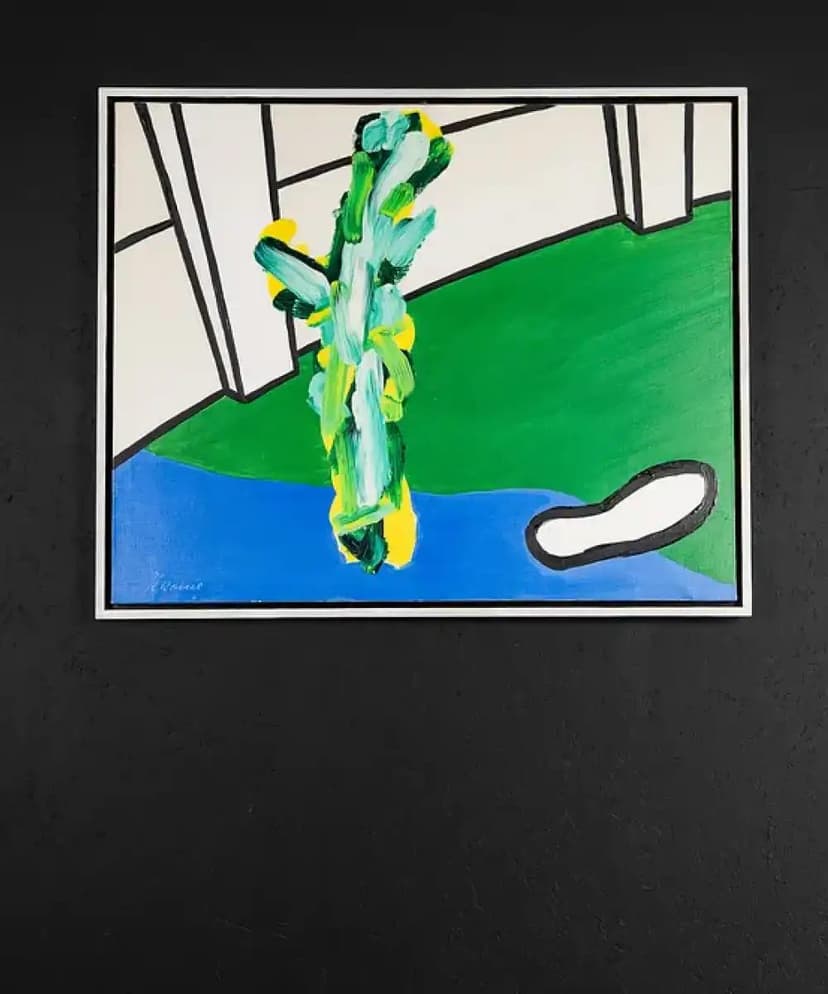
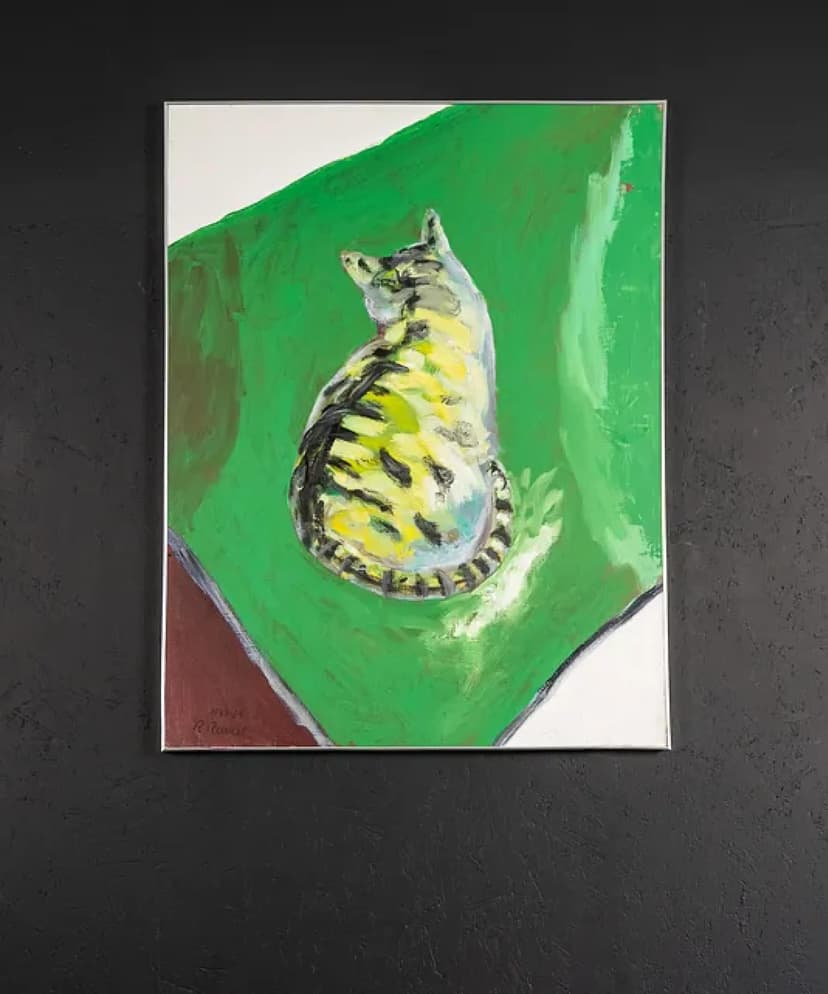
Man
Roger Raveel grew up in Machelen-aan-de-Leie. This village was a source of inspiration throughout his career. He saw beauty where others saw the ordinary. His wife, his garden, his neighbors recurred as silent witnesses to a changing world. "The ordinary is the most beautiful," he said, and he made that idea his life's work.
Moment
In the 1960s, when the world was looking toward the future, Raveel remained close to home. While Pop Art (Andy Warhol) celebrated consumerism, he painted the village, the window, the bicycle, the cat... Between his colors, he left white space, voids that give the viewer breathing room. These spaces are not absence, but silence. In that silence, Raveel finds the essence of modern man: present and searching.
Matter
His oil paintings combine bright areas of color with white and mirrors. That white seems silent. It vibrates. That mirror seems cold, but it reflects you, the viewer. Suddenly, you become part of the painting. This is precisely where Raveel's magic lies. He brings art back to people; his canvases are not windows to another world, but mirrors of our own.
What is his greatest contribution to art history?
Roger Raveel redefines realism in modern art. If you dare to look, he shows you that reality itself contains poetry. Instead of rejecting the ordinary, he elevates it. He brings painting back to its human core: seeing, feeling, recognizing. In doing so, he gives Flemish art a new direction, between tradition and modernity.
Can we consider him a master?
Yes, without a doubt. Raveel belongs in the ranks of great Flemish masters such as Ensor, Permeke, Magritte, etc., but as the master of the everyday. Where Ensor painted masks, Raveel showed the face. Where Magritte depicted dreams, Raveel let reality breathe. He represents the true Flemish way of seeing: honest, thoughtful, and human.
A work by him in every household?
Yes. A Raveel brings peace to any space. It teaches you to look again: a chair, a spot of light, a piece of sky. His paintings purify the view of noise. They remind us that beauty is everywhere, all it takes is attention. A Raveel in your home is not a possession, but a silent companion.