

Bram Bogart
The master of matter
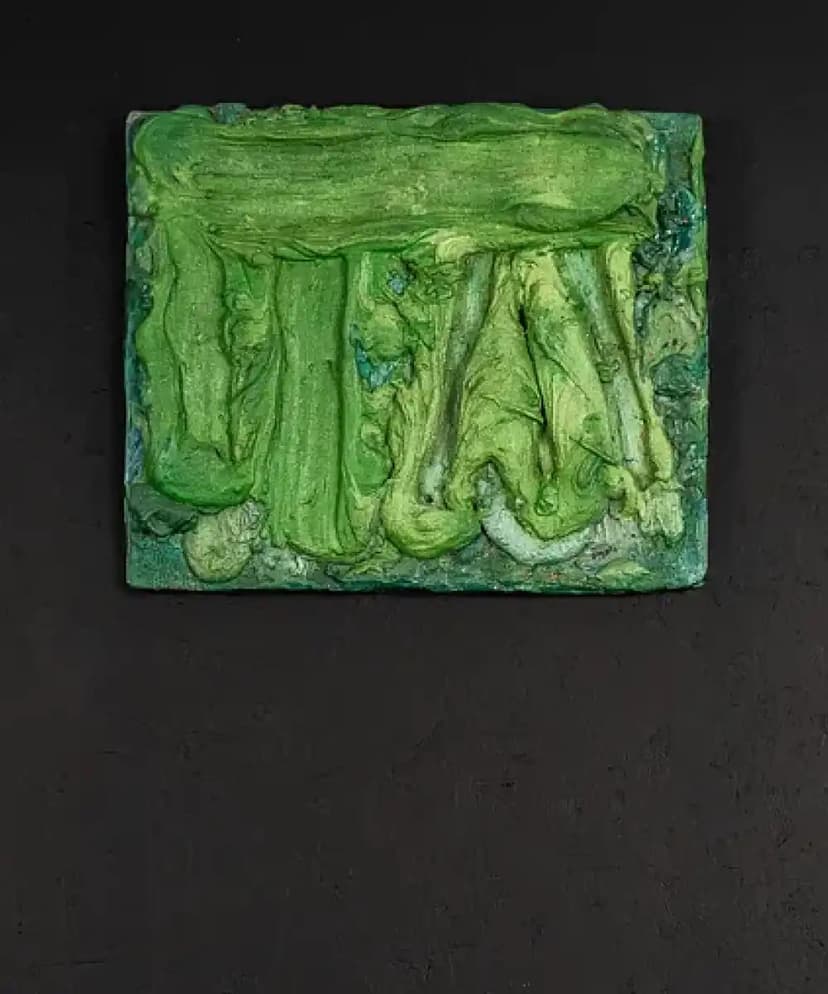
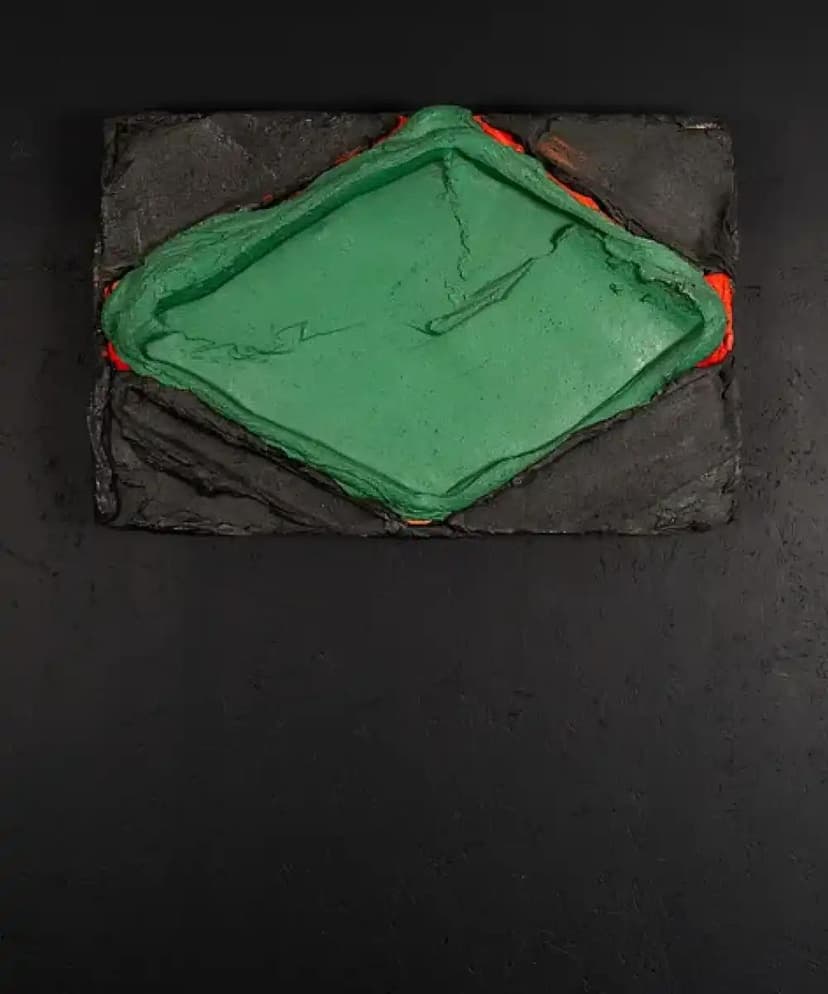
Bram Bogart is a Dutch-Belgian painter known for his monumental, impasto paintings in which color and matter take center stage. From the 1950s onwards, he developed his own style, building up thick layers of paint to create sculptural reliefs. His work lies at the intersection of painting and sculpture. It bears witness to an intense search for the physical power of color and form.
Man
Bram Bogart was born in Delft in 1921 and, after a period in Paris, found his artistic home in Belgium. He started out as a self-taught artist, influenced by expressionism, but soon developed his own characteristic style: an art of mass, matter, and energy.
In his studio, he worked like a sculptor with paint. For him, color was not a hue, but a substance — something you could touch, smell, and weigh. He lived in silence, but his paintings spoke loudly, in the rhythm of breath and gesture.
Moment
In the 1950s and 1960s, Bogart was part of the European post-war avant-garde. He worked in Paris and Brussels, where he came into contact with informal painting. However, his work differed from that of his contemporaries.
While others let the paint flow, he solidifies it. He mixes pigment with cement, powder, and linseed oil to create thick, sculptural masses. The paint becomes a body, a physical presence on the canvas.
From 1960 onwards, he created larger works in which layers of paint were built up as reliefs, where color was not painted but carried.
Matter
Bogart's work is a dialogue between weight and spirit. He uses industrial materials, but his artworks flow from pure instinct. The paint, often several centimeters thick, dries for weeks, sometimes months.
The surface is never smooth: it is alive. You can see the traces of the hand, the pressure of the palette knife, the inertia of paint resisting form. His colors are elementary: white, blue, ochre, red... They are not decoration, but fields of energy. Color in Bogart's work is silence that glows.
His canvases are not windows, but walls that breathe.
What is his greatest contribution to art history?
Bram Bogart brings painting back to its primal elements. He frees paint from its subservience to image or narrative and makes matter itself the carrier of emotion.
He proves that abstraction does not have to be empty, that mass can become spiritual, and that color — no matter how heavy — can radiate light.
With his work, he gives European painting a new physicality and brings feeling back into minimalism.
Can we consider him a master?
Yes, although born in the Netherlands, Bogart is inextricably linked to Belgium. His work embodies the Flemish power of matter: tangible, rooted, and full of soul. He belongs in the lineage of Permeke and Gentils, artists who did not paint the earth, but shaped it.
He is the master of matter, the painter who brings paint to life as clay under the hands of a sculptor.