

Man
Bert De Leeuw was born in Antwerp on June 8, 1926, and died on November 25, 2007. Self-taught, he initially worked in advertising illustration and set design. He then devoted himself entirely to art. His curiosity about matter and time was a lifelong theme. The old, the weathered, the forgotten — all these traces are part of his visual language.
Moment
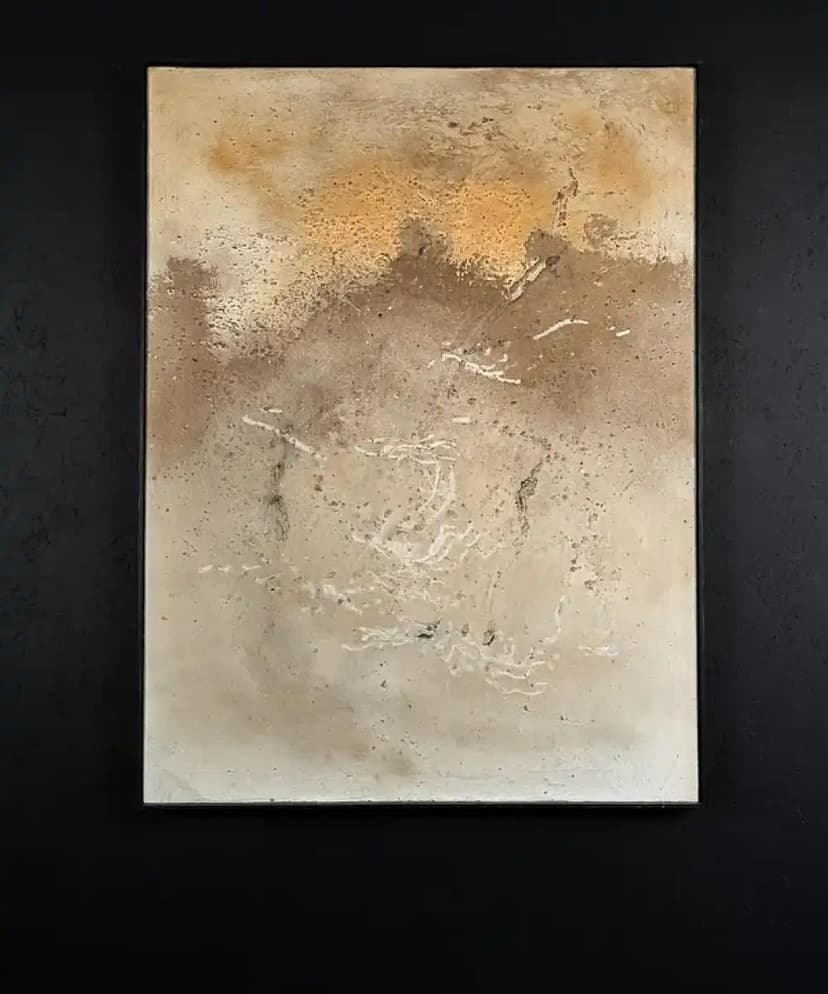
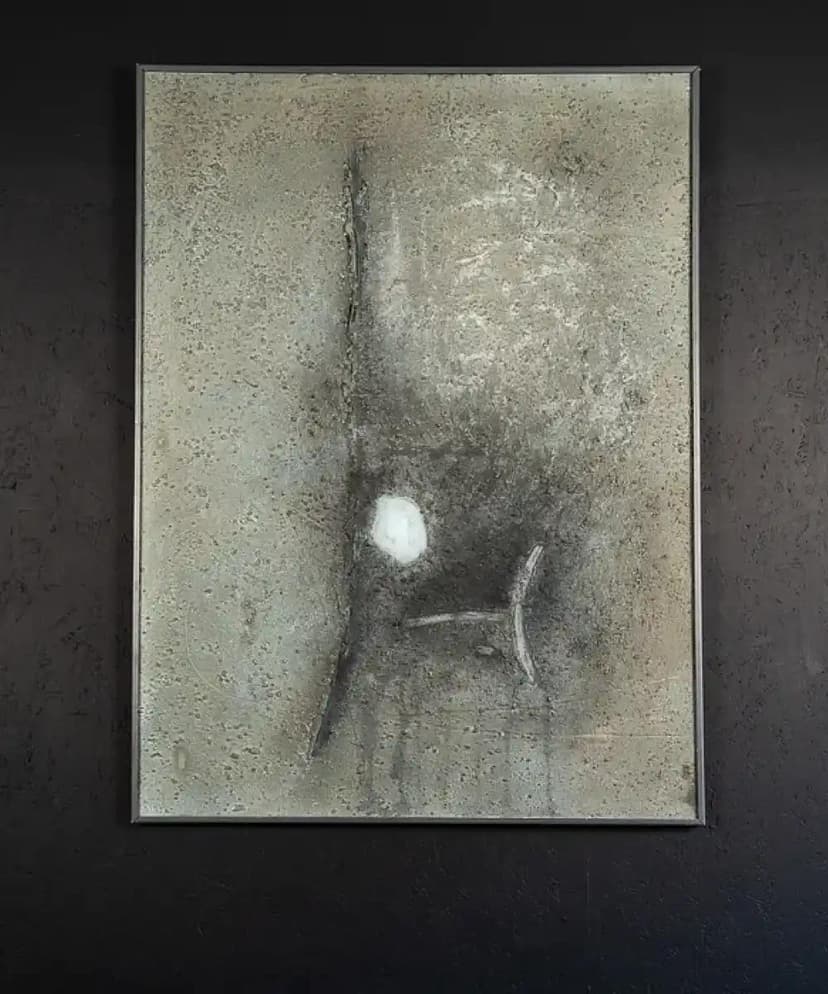
In the late 1950s, De Leeuw began creating material paintings in which he mixed paint with sand, plaster, or other substances. This allowed him to create reliefs and textures that made the surface function as tangible layers of time. In 1957, he joined the G58 artists' group (Antwerp), which focused on avant-garde abstraction.
In 1965, he switched to three-dimensional art, with sculptures and installations around the major themes of existence: life and death, uncertainty and wonder. His fascination with numbers and structures resulted in his most important work, consisting of 24 bronze elements that can be combined endlessly.
Matter
De Leeuw's paintings are often described as 'old, weathered cement walls that children have scribbled on'. He uses sand, plaster, paint, glass beads, expanded polystyrene, and other elements to load the surface with traces of time.
His bronze sculptures refer both to ancient human rituals and to bygone and futuristic civilizations. They are images that simultaneously contain older layers and possible futures.
What is his greatest contribution to art history?
Bert De Leeuw gives Belgian abstract art a dark, profound, material weight. He shows that abstraction is not just about color or form, but also about material, time, and memory.
His oeuvre builds bridges between informal material painting and sculpture with existential themes about life, death, the cosmos, and matter.
Can we consider him a master?
Yes, De Leeuw is one of the key figures of the Belgian post-war avant-garde. He is associated with groups such as G58, participates in major exhibitions, and is recognized today in museum collections. His work is rooted in Flanders.
A work by him in every household?
A work by De Leeuw brings a visual echo of time and matter into the home. It invites quiet contemplation: how did this surface come about? What traces does it bear?
In a world of fleeting images, his work provides tranquility in texture, depth in silence, and reflection in matter.